
Busy executives
A 15-minute evening practice to switch off after long days, back-to-back calls and travel.
Find a certified provider
Everything you need to understand Tension & Trauma Releasing Exercises: how the method works, what a session involves, who it is for, and the three-module pathway to becoming a Global TRE™ Certified Provider in Singapore.
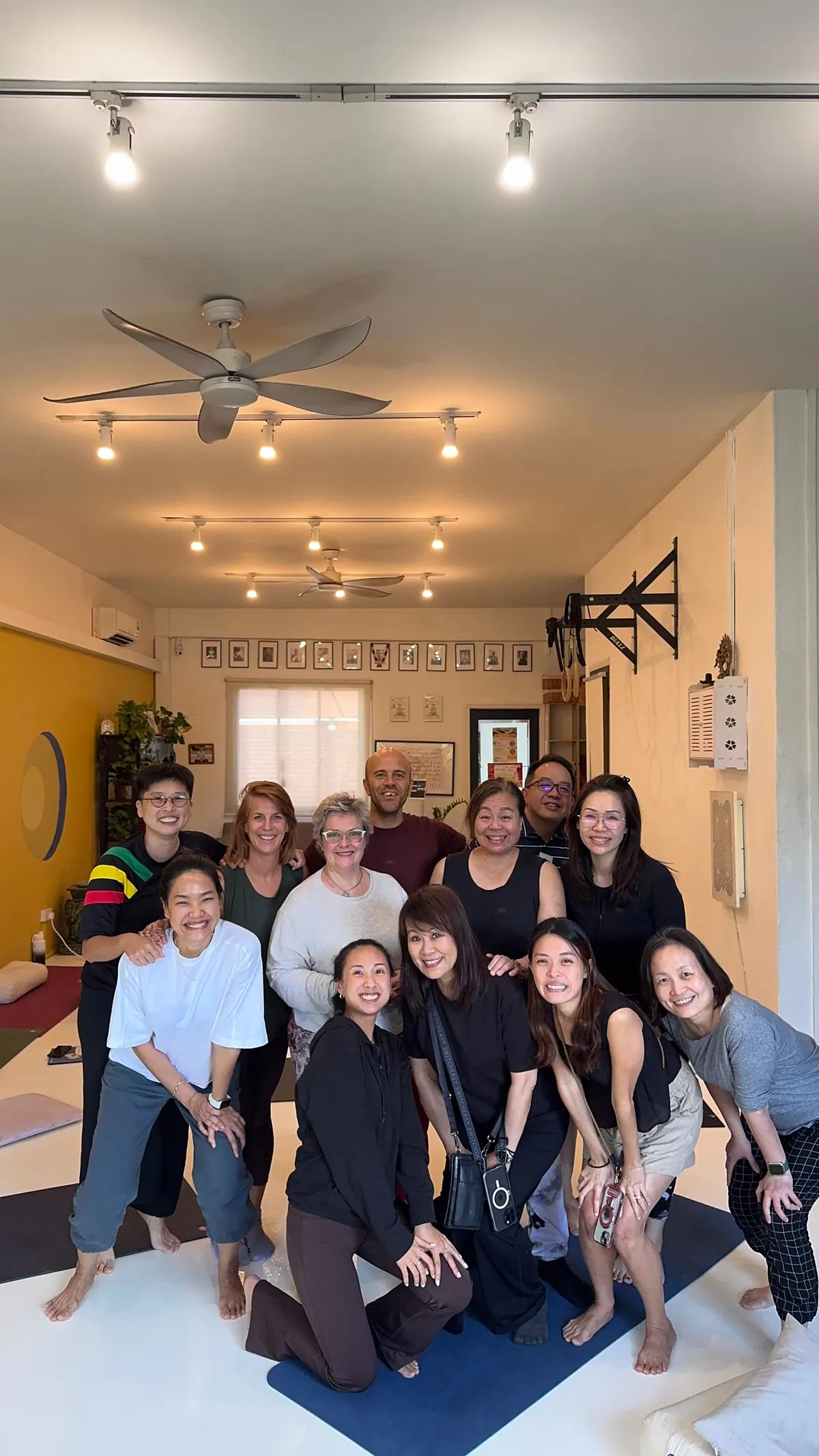
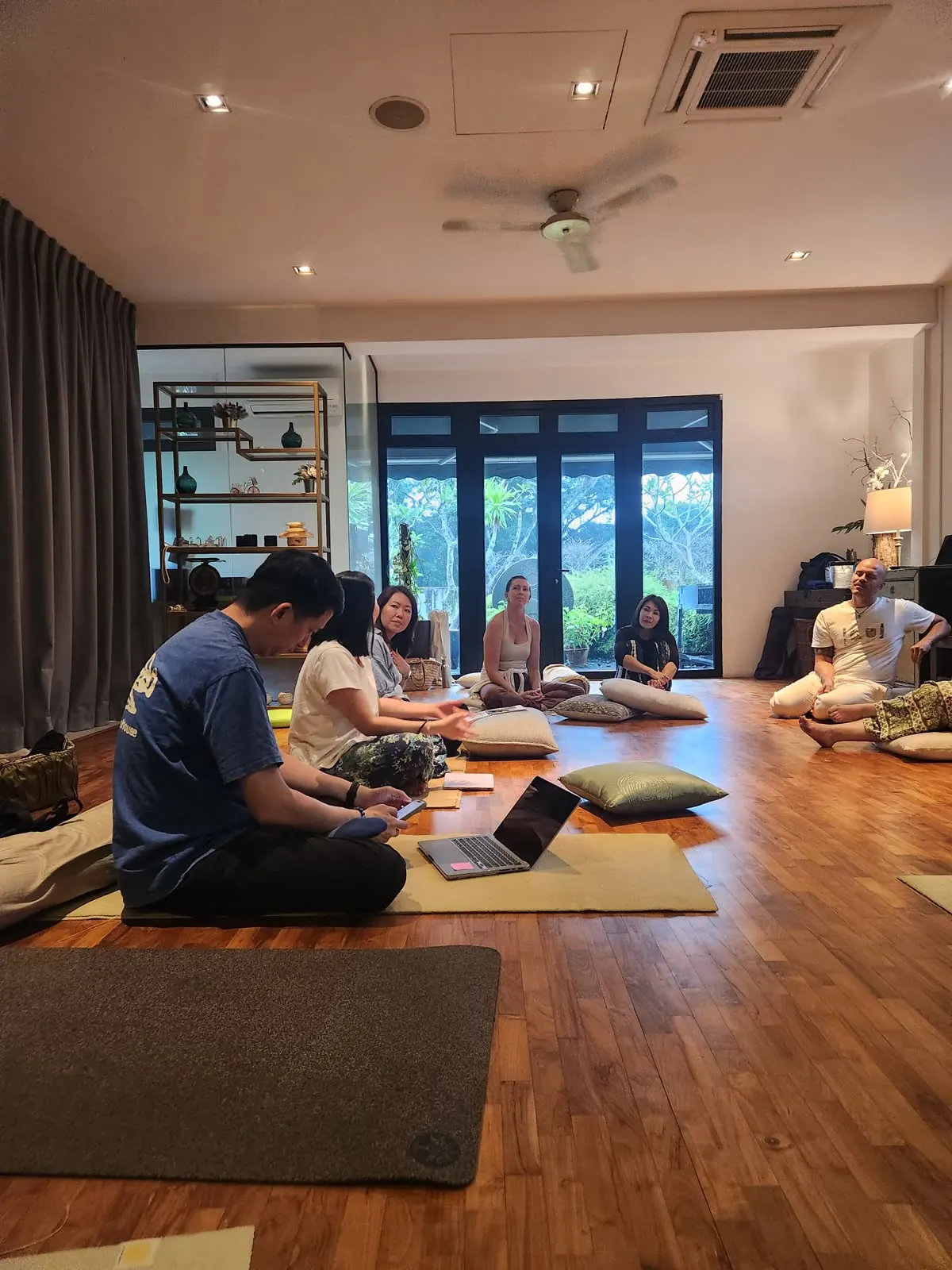
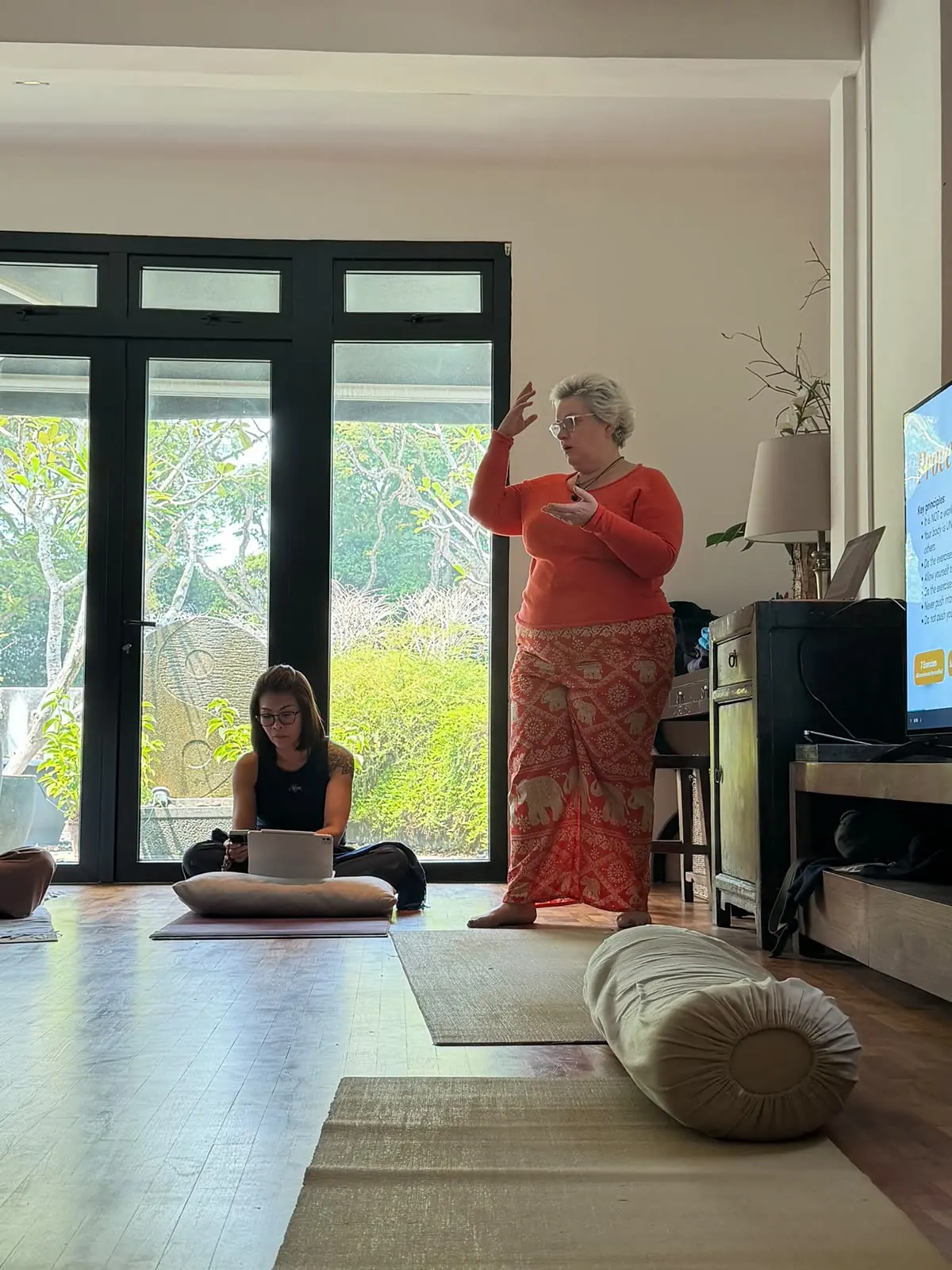
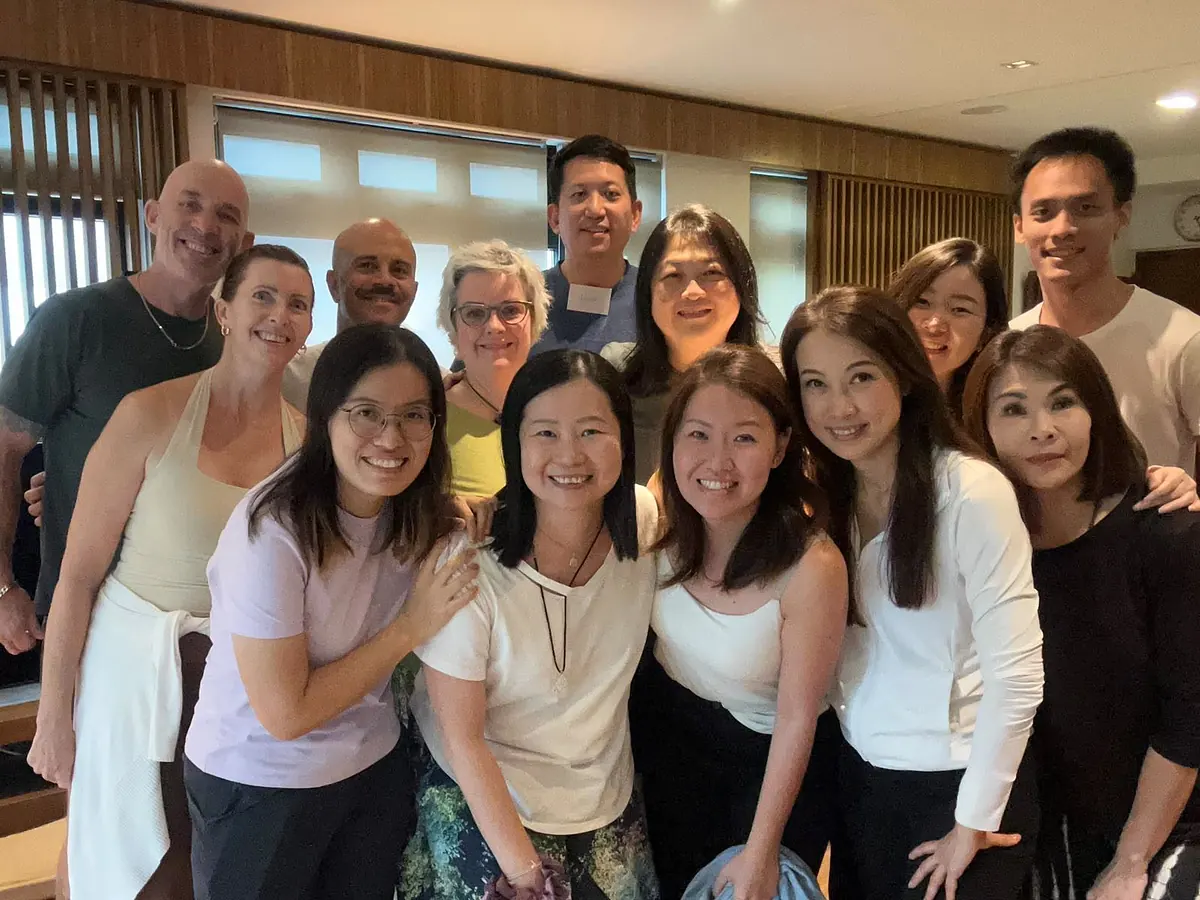
Isabelle & Simba with the Module 2 cohort · September 2026
TRE™ (Tension & Trauma Releasing Exercises) is an innovative series of seven exercises that assist the body in releasing deep muscular patterns of stress, tension and trauma. The exercises safely activate a natural reflex mechanism of shaking or vibrating — the neurogenic tremor — that releases muscular tension and calms the nervous system.
The method was created by Dr. David Berceli, PhD, an international expert in trauma intervention who observed the same instinctive tremoring response in people across cultures and conflict zones. TRE™ is now taught in more than 100 countries through a global network of certified providers and certifying trainers, coordinated by the not-for-profit TRE For All, Inc.
When the tremor is activated in a safe, controlled environment, the body is encouraged to return to a state of balance. Many people report better sleep, less anxiety, reduced muscle pain, more energy and a greater sense of calm and resilience.
Under threat, the body braces. If that charge is never discharged, it stays stored in the muscles and nervous system. TRE™ gives the body a safe way to complete the cycle.
Stress, deadlines or past events activate the sympathetic nervous system. Muscles — especially the deep psoas — contract to protect the core of the body.
The seven exercises gently fatigue and stretch these muscles until the body's innate tremor mechanism switches on. The shaking is involuntary but always within your control.
As the tremor releases stored tension, the parasympathetic system comes online — heart rate slows, breathing deepens and the body returns to rest and repair.
TRE™ is suitable for most adults and requires no prior experience. Because the tremor can bring up strong physical or emotional sensations, always learn it first with a certified provider, who will show you how to self-regulate and adapt the exercises.
Please speak to your doctor and tell your provider before a session if you are pregnant, recovering from surgery or injury, have epilepsy or a seizure disorder, a heart condition, or a psychiatric diagnosis such as complex PTSD, bipolar disorder or psychosis. TRE™ does not replace medical or psychological treatment.
How to prepare for your first sessionA 15-minute evening practice to switch off after long days, back-to-back calls and travel.
Find a certified providerSelf-care against secondary stress, plus a body-based tool to offer clients (see the certification pathway below).
Certification pathwayGroup sessions and workshops that give employees a skill they keep, not a one-off perk.
Enquire about a private eventA complement to existing practice: deeper release, faster recovery and better body awareness.
See upcoming eventsThe certification comprises three sequential modules. Each includes a 2-day in-person workshop plus 4 online sessions. On completion you receive the Global TRE™ Certified Provider certificate, qualifying you to offer individual and group TRE™ sessions anywhere in the world.
2-day workshop + 4 online sessions · 21 ICF CCEUs · Singapore: 27–28 Feb 2027
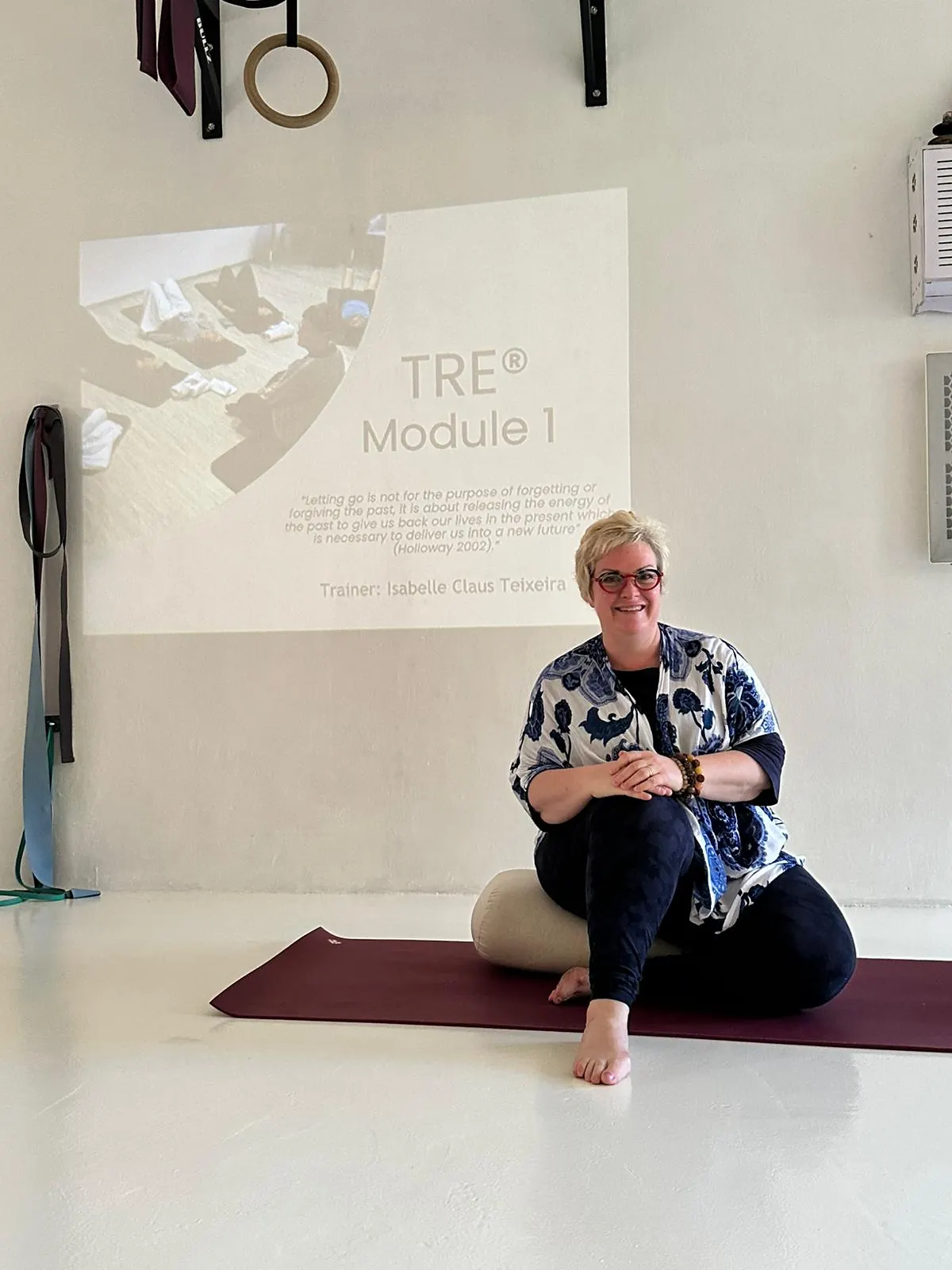
Anatomy of the stress response, the therapeutic tremor response and self-regulation techniques. You leave with a confident personal practice — the foundation for everything that follows. Open to anyone; also available online.
2-day workshop + 4 online supervision sessions · Singapore: 3–4 Jul 2027 · Prerequisite: Module 1
Polyvagal theory and basic interventions, with hands-on practice guiding an individual client through the process safely.
2-day workshop + 4 online supervision sessions · Singapore: 30–31 Oct 2027 · Prerequisite: Module 2 requirements
Fascia, advanced interventions and group facilitation for three or more participants. Completes the certification.
Early-bird fees apply until 31 December 2026. All fees in Singapore dollars. See the 2027 cohort's dates and programme.
| Option | Early bird (to 31 Dec 2026) | Regular |
|---|---|---|
| Full certification + bonus programs Modules 1–3, all online sessions and supervisions, three self-paced bonus programs, certificate | S$5,888 | S$6,688 |
| Module 1 only — personal practice 2 days in person + 4 online sessions, ICF CCE for coaches; can be taken alone | S$1,888 | S$1,988 |
Tickets are non-refundable and non-cancellable. Payment plans can be discussed on the intake call. Module 1 online, and Module 2 and Module 3 fees for participants who completed Module 1 elsewhere, are quoted on request.
No. TRE™ is designed for anyone. Your provider adapts the exercises to your body and shows you how to control the intensity from the very first session.
No. TRE™ works through the body. You never need to describe what happened, and many people prefer it for exactly that reason.
Most people learn a safe self-practice in three to four sessions with a certified provider, then continue at home. Group sessions and practice circles are a good way to keep going.
Yes. Module 1 is offered online as well as in person. Modules 2 and 3 are in person in Singapore, each followed by online supervision.
Module 1 carries 21 ICF Continuing Coach Education Units, recognised by the International Coaching Federation for credential renewal.
The 2027 Singapore cohort runs from February to October 2027: Module 1 on 27–28 February, Module 2 on 3–4 July and Module 3 on 30–31 October. Supervision requirements between modules mean most participants complete within 6–9 months.
You join the worldwide TRE™ provider network, can be listed in the Singapore directory on this site, and are welcome at our monthly practice circle and continuing-education workshops.
TRE™ is suitable for most adults and requires no prior experience.
Payment plans can be discussed on the intake call.